

The Migraine Aura Scan in Brief
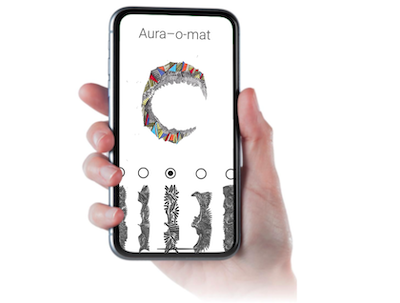
A short introduction for those who don't yet have a password but want to know what the MigraineAuraScan — the Aura Anamnesis from the Migraine Aura Foundation — does.
Revised editions of selected posts originally published on the science blogs Gray Matters and Graue Substanz — updated for clarity and today's context.
A short introduction for those who don't yet have a password but want to know what the MigraineAuraScan — the Aura Anamnesis from the Migraine Aura Foundation — does.
How the MigraineAuraScan guides patients toward understanding, improves the patient journey, and supports clinical care.
Visual triggers of epilepsy and migraine are light stimuli optimally tuned to the neural wiring of the cerebral cortex — and they are by no means limited to flickering video games anymore.
Zigzags, flickers, flashes, and stripe patterns — some visual stimuli can trigger a migraine, others an epileptic seizure. But could they also treat what they provoke? In this three-part series, I explore how visual hallucinations emerge in migraine, why some brains are hypersensitive to light, and whether precisely tuned stimuli might one day offer relief. An unexpected music video sets the stage for some illuminating science.
Visual perception plays a special role in migraine. Light sensitivity and the visual disturbances that occur during an attack raise an important question: can light also have a positive effect?
Therapeutic magnetic stimulation for migraine has received widespread attention. One device—a transcranial magnetic stimulator nicknamed the migraine zapper—has been approved by the FDA as an investigational medical device.
Visual triggers of epilepsy and migraine are light stimuli optimally tuned to the neural wiring of the cerebral cortex — and they are by no means limited to flickering video games anymore.