

Overview
Salvador Dalí, the Surrealist master known for his technique of “paranoiac-critical method” and his dreamlike, melting forms, has been suggested by some observers as a likely migraine sufferer. His most iconic work, The Persistence of Memory (1931) with its famous soft, drooping watches, reportedly emerged during a period when he was managing migraine-induced nightmares.
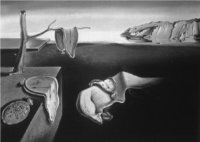
According to one account, the inspiration came after dinner when suffering from migraine, observing the softness of melting Camembert cheese. This anecdotal evidence suggests that migraine states contributed to the dreamlike quality and temporal distortion central to Surrealism. The softness, fluidity, and perceptual strangeness of his forms align with descriptions of how migraine aura transforms spatial and temporal perception.
While documented migraine diagnosis is not established for Dalí as it is for some other artists, the consistency between his surrealist vocabulary and migraine phenomenology remains conceptually compelling. His work exemplifies the Surrealist project of accessing non-rational consciousness—a project that migraine, with its alterations of perception and consciousness, materially enables.