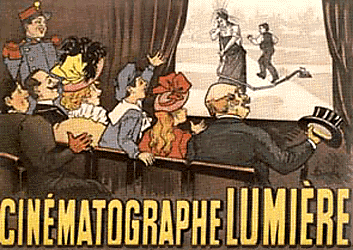

Overview
Louis Lumière, along with his brother Auguste, developed the cinematograph and is credited as one of the founders of cinema. Biographical accounts describe the young Lumière brothers as “migraine-prone workaholics,” suggesting that migraine affected Louis during his formative years and early career.
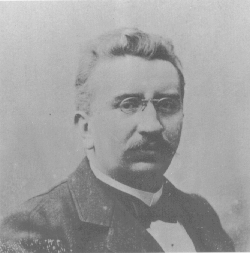
According to one account, Lumière conceived of the cinematograph—a camera that could also serve as a projector—while suffering from migraine-induced nightmares. The ingenious mechanical solution of the moving claw arm that advanced the film may have emerged from a mind engaged with both the theoretical problems of image projection and the visual disturbances of migraine aura.
While speculative, the possibility that migraine shaped Lumière’s approach to capturing and projecting moving images adds an intriguing dimension to the history of cinema. His technical innovations transformed not just how we create images, but how we experience them collectively.