

Overview
German writer Erich Kästner is best remembered for Emil und die Detektive (Emil and the Detectives, 1929), a beloved children’s novel that launched a literary career spanning multiple decades. Beyond his celebrated work for young readers, Kästner produced novels, plays, poetry, and essays that often explored themes of social critique, childhood, and the tensions between idealism and reality.
Migraine in Pünktchen und Anton (1931)
In his children’s novel Pünktchen und Anton, Kästner writes:
„Nach dem Mittagessen kriegte Frau Direktor Pogge ihre Migräne. Migräne sind Kopfschmerzen, auch wenn man gar keine hat.”
(“After lunch, Frau Direktor Pogge would get her migraine. Migraines are headaches, even when you don’t have one.”)
Within the novel the line serves to portray Pünktchen’s mother as a refined society lady who frets over children around the world while neglecting her own daughter — migraine appearing here as a pretext, almost as hypochondria. Yet because Kästner himself suffered from migraine, a more telling reading suggests itself: in this seemingly paradoxical sentence he was casually pointing at a real phenomenon — migraine without headache, today recognised as a distinct variant of the disorder.
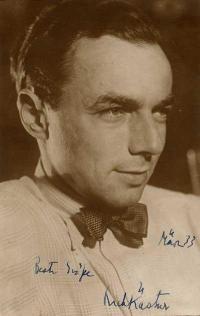
Kästner’s personal experience with migraine informed his understanding of physical suffering and human vulnerability. While not the explicit subject of his most famous works, migraine appears in his broader literary and philosophical engagement with the body, pain, and the ordinary struggles of human existence. His ability to capture precise, often poignant observations of human experience—whether in stories of children navigating the complexities of urban life or in more introspective writing—reflects a sensibility attuned to subtle perceptual shifts and the interior landscape of physical and emotional states.
Kästner lived through tumultuous historical periods—Weimar Germany, Nazi rule, and post-war Germany—experiences that demanded resilience and clarity of vision. His literary practice of close observation and unflinching honesty about human nature and suffering extended to his own experience of migraine, which, like so many aspects of his life, he approached with pragmatism and thoughtfulness.